
Warehouse Security Johannesburg: Stopping Syndicates and Inside Jobs in 2026
Published: June 2026 | Reading time: 14 minutes
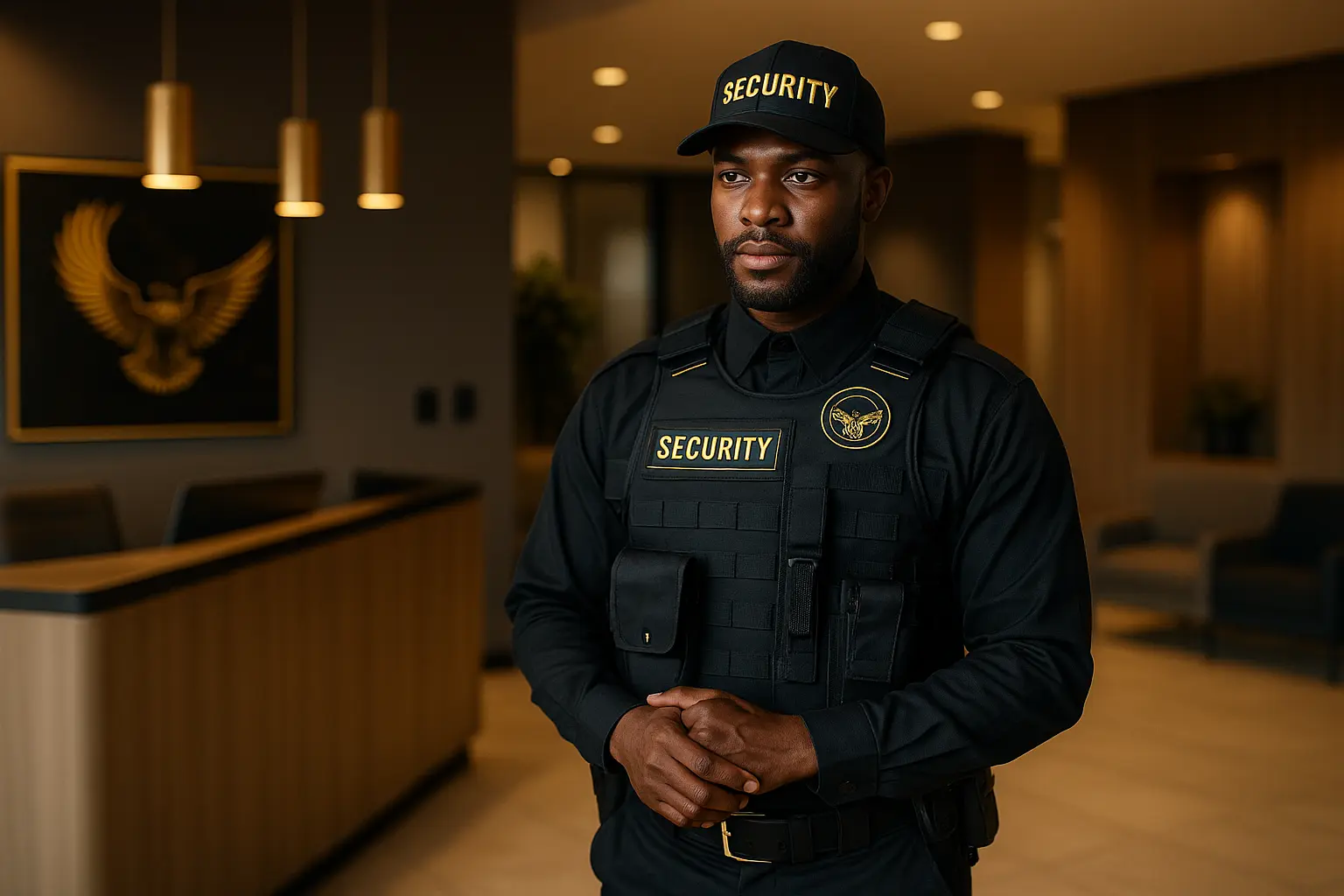
Here is the thing most facility managers in Johannesburg get wrong about warehouse security Johannesburg. They picture the threat as something that comes over the fence at 2am. A broken padlock, a cut in the razor wire, a smash-and-grab. So they buy a taller fence and a brighter light, and they sleep a little easier.
Meanwhile, the real money is walking out the front gate in daylight — inside a delivery, under a swapped barcode, with the full knowledge of someone on the payroll. We have watched logistics operations in Midrand, City Deep and Jet Park bleed more than R500,000 a month for over a year while management quietly wrote it off as "stock variance" and "administrative error." It was neither. It was a syndicate, and at least one of its members had a staff access card.
This guide is about what actually works against that — written by a PSIRA-registered private security company that runs warehouse security Johannesburg across the logistics belt. It covers the threat honestly, lays out the three-pillar model we use to shut it down, and walks through a real Midrand case where we cut losses by 94%. No fluff, and no pretending a guard at a gate is a strategy on its own.
What this guide covers
- The new face of warehouse crime in Johannesburg
- The three attack patterns every facility faces
- The three-pillar model for warehouse security Johannesburg
- Counter-intelligence: catching the watchers
- Covert operations and the inside job
- Case study: breaking a Midrand syndicate
- How to choose a warehouse security provider
- Why operators choose IPS for warehouse security Johannesburg
- Frequently asked questions
The New Face of Warehouse Crime in Johannesburg
Johannesburg sits at the centre of South Africa's logistics network, and that is exactly why it carries the heaviest cargo-crime load in the country. Every major freight route runs through or past it. The East Rand industrial belt — Isando, Spartan, Kempton Park, Jet Park — is minutes from OR Tambo and the highways. City Deep is the largest inland port in Africa. Each of these zones packs more value per square metre than almost any other commercial property type, and the people who steal for a living know it.
What has changed is the sophistication. Opportunistic break-ins are down. Organised, internal theft is up. Syndicates now recruit employees, bribe security staff, and study a site's blind spots the way a surveyor studies a plot. Commercial crime in Gauteng has climbed year on year — and the official figure understates it badly, because so much warehouse loss is discovered months late, if at all. You cannot report what your stock count never flagged.
According to the Transported Asset Protection Association (TAPA), the international authority on supply chain security, South Africa remains among the highest-risk cargo theft environments worldwide. Within the country, the Gauteng logistics belt is the epicentre. That is the environment any warehouse security Johannesburg deployment must be built for.
A guard at the gate and a few cameras cannot stop a tag-swap scheme, where high-value SKUs are relabelled as cheap items during picking and walked out through a staff door with no surveillance on it. That kind of loss does not trip an alarm. It needs a fundamentally different response — which is what the rest of this guide is about.
The Three Attack Patterns Every Warehouse Faces
Before you can defend a site, you have to be honest about how it actually gets hit. In our experience across the Johannesburg belt, warehouse losses fall into three categories — and a security setup that only guards against one of them is not security, it is a comfortable illusion.
1. The External Strike
The coordinated, often armed entry. Several attackers, arriving in the 60-to-90-second window when a loading bay opens for a legitimate delivery. They know the layout because they have watched it for days. The defence is not one guard at a gate — it is layered detection that sees them coming before the gate, access control that denies the bay window, and an armed response with an honest arrival time.
2. The Inside Job
The most damaging and least talked-about. Stock that leaves gradually — a pallet here, a miscounted delivery there, a barcode swapped during picking, collusion between a staff member and an outside buyer. No alarm sounds because nothing is "broken into." This is a vetting, supervision and investigation problem far more than a guarding one, and it is where most serious warehouse money is lost.
3. The Slow Bleed
Opportunistic, low-level, relentless. Perimeter breaches at night, theft from yards and trailers, fuel siphoning, copper and equipment stripping. Each incident is minor; the annual total is enormous. This is where patrol discipline, lighting, electronic detection and a guard force that is genuinely awake and supervised earn every cent they cost.
Most warehouses we assess are defended against the first pattern, partly aware of the third, and almost completely exposed to the second. The inside job is the gap. Hold that thought, because it runs through everything below.
The Three-Pillar Model for Warehouse Security Johannesburg
We do not sell guards. We do not sell cameras. We sell an outcome — your stock stays where it belongs — and delivering it reliably takes three things working as one system, not three vendors blaming each other when something goes missing. We call them pillars, and the power is in the integration, not the individual parts.
Guards Who Do More Than Stand at a Gate
Our security guards are not static observers waiting out a shift. They are trained in behaviour analysis, access-control enforcement, incident response, evidence preservation and surveillance detection. Every officer is PSIRA-registered and kept in continuous training.
But the real value is in how they are deployed. We rotate posts so a watching syndicate cannot map a pattern, monitor patrol routes in real time, and feed what guards observe straight into a central picture. A guard who clocks an unfamiliar vehicle parked across the road three mornings running is no longer just a man in a uniform — he is the first sensor in an early-warning system. Local risk shapes the deployment, which is why our security guards Johannesburg teams are matched to East Rand and central sites, our security guards Pretoria teams cover Tshwane-side facilities, and security guards Sandton resources handle corporate distribution nodes. For multi-bay distribution centres specifically, our commercial security guards capability is built around exactly this kind of site.
Investigators Who Find the Hidden Syndicate
The majority of serious warehouse loss starts inside the organisation — a manager skimming inventory, a loader in league with a driver, a clerk selling the delivery schedule. The threat is usually trusted, which is exactly why visible security never catches it. Our private investigator division works discreetly: background checks on staff and third parties, procurement-fraud and inflated-invoice investigations, theft-by-collusion cases, and protection of intellectual property against industrial espionage.
These are not amateurs with clipboards. Our investigators carry backgrounds in law enforcement, forensic accounting and intelligence, and they gather evidence to a standard that survives a CCMA disciplinary hearing or a criminal prosecution. When a ring is identified, we do not just remove the people — we rebuild the process that let them operate, so the gap closes for good.

Integrated Technology as a Force Multiplier
Even excellent guards cannot be everywhere at once. Technology extends their reach and surfaces the data that exposes complex schemes. The toolkit includes SABS-compliant electric fencing tied into the control room for instant alerts, AI-assisted CCTV with licence-plate recognition and after-hours loitering detection, biometric and smart-card access control that logs who entered which zone and when, and a 24/7 monitored control centre that verifies alarms and dispatches response.
The point is that none of it stands alone. When an access-control reader shows someone entering a restricted aisle at 3am, that single event triggers both a guard response and an investigation flag at the same moment. That fusion — physical, human and digital pulling on the same rope — is what makes the whole far stronger than the sum of its parts.
Counter-Intelligence: Catching the Watchers
Here is the shift in thinking that separates a warehouse that gets hit from one that gets left alone. The conventional model is reactive — build a wall, post a guard, respond when the alarm goes. The syndicates have already solved for that model; they watched it being built. The operations that genuinely protect high-value Johannesburg sites treat the warehouse as a counter-intelligence problem, not just a physical one.
A cargo syndicate's biggest weakness is its own surveillance phase. Before any strike, they have to watch — for days, sometimes weeks. They map shift changes, time the deliveries, work out which guard is sharp and which is half-asleep, and probe for the insider. That phase is when they are most exposed, and it is exactly the phase a good operation is built to detect.
The signatures are subtle. The same car parked across the road on three different mornings. A "broken-down" vehicle near the access route that is gone by the time anyone checks. A delivery that turns up at the wrong gate "by mistake" and lingers a little too long. A pedestrian who walks the fence line with more purpose than a passer-by should. None of it means anything to an untrained guard. To a trained one, it is a syndicate doing its homework — and a reason to harden, vary the patterns, and quietly raise the alert level before anything happens.
And then there is unpredictability, which is the cheapest powerful weapon in the whole discipline. Syndicates plan around patterns. A guard change at the same minute every night, a patrol that always runs the same loop, a supervisor who visits at the same hour — every one of those is a gift to a planner. Scramble them. Randomise patrol timing and routing. Vary the shift-change procedure. When days of careful surveillance produce no reliable pattern to exploit, most crews simply move on to an easier target. The strike that never gets planned is the cheapest one you will ever prevent.
Covert Operations and the Inside Job
When a site shows the fingerprints of internal theft — shrinkage that does not match any external breach — a uniform is the wrong tool. You cannot guard your way out of a problem that is already inside the wire wearing your own company's badge. The right tool is a placed operative: a vetted investigator working inside the workforce as an ordinary employee, seeing the floor from the inside, mapping the collusion network that visible security can never reach.
An undercover deployment answers the questions a camera cannot. Who signs off on the short deliveries. Which loader lingers at which bay. Who leaves with whom, and when. How the stock actually moves off site, and where it goes next. A problem that looked like an unsolvable steady bleed resolves, within a few weeks, into named individuals and a documented chain of events.
But identifying a thief is only half the job. The other half is proof that holds up. A CCMA disciplinary hearing and a criminal court both demand evidence gathered lawfully and documented properly. A covert operation that produces suspicion but not admissible proof leaves you exactly where you started, minus a tip-off and plus a rattled workforce. A properly run one produces statements, surveillance logs and continuity of evidence that survives a challenge. That difference — between knowing and proving — is the entire value of doing it correctly, and it is where cheap operators fall apart.
Case Study: Breaking a Warehouse Syndicate in Midrand
Eighteen months of "stock variance" that was actually a syndicate
A logistics company in Midrand came to us after a year and a half of unexplained losses topping R500,000 a month. The frustrating part, for them, was that the paperwork looked clean — stock counts matched invoices on paper, yet the physical inventory kept shrinking. Management had spent months assuming it was a systems or counting problem. It was not.
We deployed all three pillars at once. Two covert operatives went in as temporary staff. We placed additional cameras in the high-risk picking zones where the numbers did not reconcile. And we randomised the gatehouse roster to break the familiarity the crew had been relying on.
Within three weeks the picture was clear. It was a tag-swap scheme: warehouse staff were relabelling high-value SKUs with low-value barcodes during picking, then walking the items out through a staff exit that, crucially, had no electronic surveillance on it. The ring ran to four employees and two external buyers who were taking the goods on. Once the evidence was solid, the arrests and process changes followed — and losses fell by 94% within six months. The client kept the integrated guarding-and-investigation service on permanently, which tells you more than any testimonial could.
Result: 94% reduction in losses within six monthsThe lesson in that case is the same one running through this whole guide. If the company had simply hired more guards, the scheme would have continued — the guards were not the weak point, the unwatched staff door and the trusted picking staff were. It took investigation to find it, technology to confirm it, and guarding to hold the line afterwards. One pillar alone would have failed.
How to Choose a Warehouse Security Provider in Johannesburg
Most warehouse security failures are not dramatic. They are the slow consequence of appointing the wrong provider and only discovering the gaps after a loss. A few questions separate a real operation from a uniform-rental service, and they are worth asking every bidder bluntly.
- Can they show PSIRA registration — both company and individual officers? The business must be registered, and so must every officer they put on your site. Ask for numbers and check them.
- Do they conduct a physical site assessment before quoting? A price given over the phone is a price designed to win the contract, not to protect the site. No assessment, no serious provider.
- Do they pay their officers properly, and can they prove it? Guard welfare is a security control, not an HR footnote. An underpaid guard is the easiest person on site for a syndicate to buy. How a company treats its people tells you how loyal they will be at 3am.
- Is there a real control room and armed response tie-in? Detection without response is just reporting. Ask for honest arrival times, not marketing ones.
- Do they handle the inside-job dimension at all? A provider who only thinks about the fence line is ignoring the costliest category of loss. Vetting depth and investigation capability matter as much as the guard count.
Beyond the warehouse itself, the right partner can secure the whole operation — residential security services for staff and directors who become targets because of what they control, event security services for supplier days and launches, and close protection through VIP protection services South Africa for principals at genuine risk. And when you are ready to build a budget, our security guards prices guide sets out the compliant, gazette-backed numbers in full.
Why Operators Choose IPS for Warehouse Security Johannesburg
What you get with an integrated IPS deployment
- Single point of contact. Guards, investigators and systems managed by one team, so nobody passes the blame when something goes wrong.
- PSIRA-compliant and insured. Full regulatory compliance, properly paid officers, and the liability cover that protects you under Section 198 of the Labour Relations Act.
- Data-driven deployments. Resources matched to real risk after a site assessment, not a guess and a generic headcount.
- Investigation built in. The covert and forensic capability to find the inside job, not just patrol around it.
- 24/7 national support. Infrastructure ready from a Midrand base that sits on the busiest freight corridor in the country.
Frequently Asked Questions About Warehouse Security Johannesburg
It depends on the size of the facility, your operating hours, the value and type of stock, and the local risk profile. A small daytime operation may need a single access-controlled post; a 24/7 multi-bay distribution hub on a hijacking corridor needs a layered team with armed night cover. We run a free site assessment to work out the right guard count and technology mix rather than selling you a number over the phone.
Across the industry, internal theft and collusion account for a bigger share of total losses than dramatic armed strikes. The inside job is quieter, harder to detect, and continuous — exactly the Midrand case described above. This is why effective warehouse security Johannesburg pairs physical guarding with thorough vetting and, where shrinkage is suspected, a discreet private investigator capability to find the source and build usable evidence.
Where the risk justifies it, yes. All armed officers hold valid firearm competency certificates and undergo regular range training. Whether an armed post is appropriate is a question the site assessment answers — a low-risk daytime facility may be well served by unarmed officers with strong access control, while a high-value site on a cargo-crime corridor almost certainly warrants armed coverage and a control-room tie-in.
Because the saving almost always comes out of the guard's wages — and an underpaid guard is the easiest person on site for a syndicate to compromise. A month's wages offered for the gate code and a blind eye finds its readiest takers among officers a company has already chosen not to pay properly. The cheap contract does not just protect the warehouse poorly; it can become the breach itself. It also exposes you to joint liability under Section 198 of the Labour Relations Act for the provider's labour violations.
A standard guarding deployment can usually be mobilised within a few days of a completed site assessment and signed agreement, with interim cover available faster for urgent situations. Investigative resources — including covert placements — can typically be mobilised within 24 hours depending on complexity and location.
PSIRA is the Private Security Industry Regulatory Authority, the body that regulates private security in South Africa. Using a PSIRA-registered company ensures your security partner is legally compliant, properly insured, and accountable. Both the company and every individual officer deployed must be registered — and a legitimate provider will hand over those registration numbers without hesitation.
Yes, and for warehouses it is usually the most cost-effective route. Layering electric-fence monitoring, AI-assisted CCTV and access control around a smaller, well-supervised guard force often delivers stronger protection than simply adding bodies. The technology detects and buys time; the officers respond. A combined assessment identifies the right balance for your specific site.
Strengthen Your Warehouse Security Today
Do not wait for a loss to reveal the gaps. Let our team run a full risk assessment and design an integrated guarding, investigation and technology solution built around your facility — across the Johannesburg logistics belt from our Midrand base.
PSIRA-registered. Free, no-obligation site assessment.
Request Your Free Security AssessmentIntelligence VIP Protection Services protects warehouses, distribution centres and industrial sites across Johannesburg, Midrand and the greater Gauteng logistics belt. Whether you are reviewing an existing contract or securing a new facility, the conversation begins with understanding your specific risk — and it is free, confidential, and available at any time.